

Understanding what are an employer’s responsibilities when an employee Is off sick is essential for protecting your business while supporting your workforce. Many employers want to do the right thing but are unsure where the legal boundaries sit or how far their obligations extend.
If you need expert help, see our Employee Sickness
Although each situation will depend on the individual circumstances, there are clear principles under UK employment law that employers should follow. These include maintaining fair procedures, complying with statutory requirements, and acting reasonably throughout the process.
Understanding what are an employer’s responsibilities when an employee Is off sick from the outset
From the moment an employee reports sickness absence, employers should respond promptly and appropriately. This does not require immediate formal action; however, it does mean acknowledging the absence and ensuring proper records are kept.
Employers should consider putting in place a clear sickness absence policy within their Contracts of Employment. This may suggest expectations around reporting, certification, and ongoing communication.
In my experience, having a structured process reduces confusion and helps demonstrate consistency if decisions are later challenged.
- Ensure employees know how to report absence
- Record the reason and expected duration
- Apply policies consistently across staff
Maintaining reasonable contact during sickness absence
A key part of what are an employer’s responsibilities when an employee Is off sick is maintaining appropriate contact. However, this must be handled carefully.
Too little contact may suggest a lack of support, while too much contact could be perceived as pressure. Employers should aim for a balanced, supportive approach.
This may include periodic check-ins to understand how the employee is progressing and whether any support is required. In longer-term absences, more structured communication may be appropriate.
Employers should consider documenting all contact to ensure transparency and consistency.
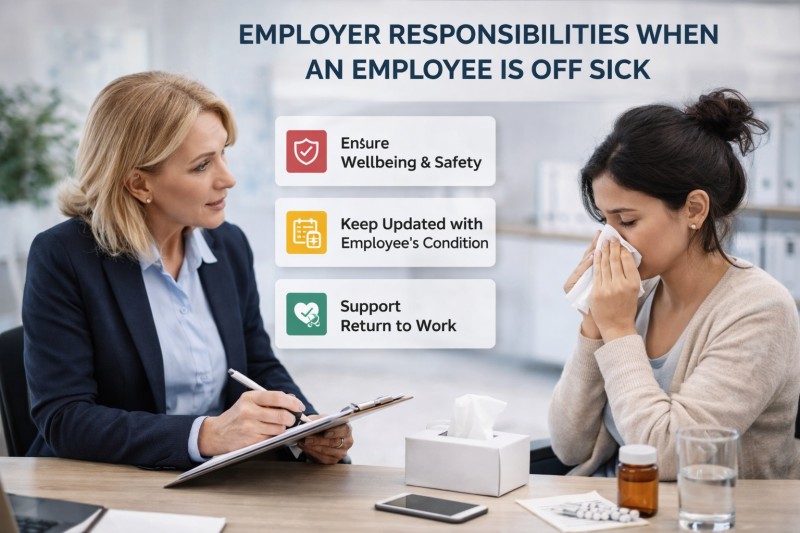
Pay and statutory obligations employers must meet
Another important aspect of what are an employer’s responsibilities when an employee Is off sick relates to pay.
Employers must ensure they meet their statutory obligations, including paying Statutory Sick Pay (SSP) where eligibility criteria are met. In addition, contractual sick pay may apply depending on the employee’s terms.
This may suggest reviewing employment contracts carefully, as failure to pay correctly can lead to disputes or claims.
- Confirm eligibility for Statutory Sick Pay
- Check contractual sick pay provisions
- Ensure payroll processes reflect correct payments
Where there is uncertainty, employers should consider seeking advice to avoid underpayment or overpayment issues.
Managing medical evidence and occupational health – What Are an Employer’s Responsibilities When an Employee Is Off Sick?
When assessing what are an employer’s responsibilities when an employee Is off sick, medical evidence plays a central role.
Employees are usually required to provide self-certification for short absences and fit notes from a GP for longer periods. However, employers may also seek further medical input, such as occupational health reports.
In my experience, obtaining professional medical advice can help employers make informed decisions, particularly where absence is prolonged or complex.
Employers should consider:
- Whether a fit note suggests adjustments or phased return
- Obtaining consent before seeking medical reports
- Using occupational health for independent assessment
This approach may suggest a fair and evidence-based process, which is important if decisions are later scrutinised.
Reasonable adjustments and disability considerations
A critical part of what are an employer’s responsibilities when an employee Is off sick involves assessing whether the employee’s condition may amount to a disability under the Equality Act 2010.
If it does, employers have a legal duty to make reasonable adjustments. This could include changes to working hours, duties, or the working environment.
This is an area where employers can easily fall into difficulty if they act too quickly without proper consideration.
Employers should consider what adjustments are practical and reasonable in their specific business context. However, what is reasonable will vary depending on factors such as business size and resources.
For further guidance on handling these situations, you may wish to revisit our Employee Sickness support page.
Handling long-term sickness and capability procedures
When absence becomes prolonged, employers must take a structured and fair approach. This is another key element of what are an employer’s responsibilities when an employee Is off sick.
Employers should not rush into dismissal. Instead, they should follow a capability process, supported by medical evidence and ongoing consultation.
This may suggest holding formal meetings with the employee to discuss their condition, prognosis, and potential return to work.
A fair process will usually include:
- Regular review meetings
- Consideration of alternative roles or adjustments
- A clear warning before any dismissal decision
Failure to follow a fair process could lead to claims of unfair dismissal, even where the absence itself is genuine.
Ensuring fairness and avoiding discrimination risks
Finally, what are an employer’s responsibilities when an employee Is off sick includes treating the employee fairly at all times.
Employers should ensure decisions are consistent and based on evidence rather than assumptions. For example, dismissing an employee without proper investigation or consultation may be seen as unreasonable.
Additionally, employers must be mindful of potential discrimination risks, particularly where the illness relates to a protected characteristic such as disability.
This may suggest taking a cautious and well-documented approach to all decisions.
Employers who follow a clear, structured process and seek advice where needed are far less likely to encounter legal issues.
Conclusion: What Are an Employer’s Responsibilities When an Employee Is Off Sick?
Understanding what are an employer’s responsibilities when an employee Is off sick is not about applying rigid rules. Instead, it is about acting reasonably, fairly, and consistently in each individual case.
Employers should consider balancing business needs with employee wellbeing, while ensuring compliance with UK employment law. This approach not only reduces legal risk but also helps maintain trust and morale within the workforce.
The most effective employers are those who plan ahead, document decisions carefully, and seek guidance when situations become complex.